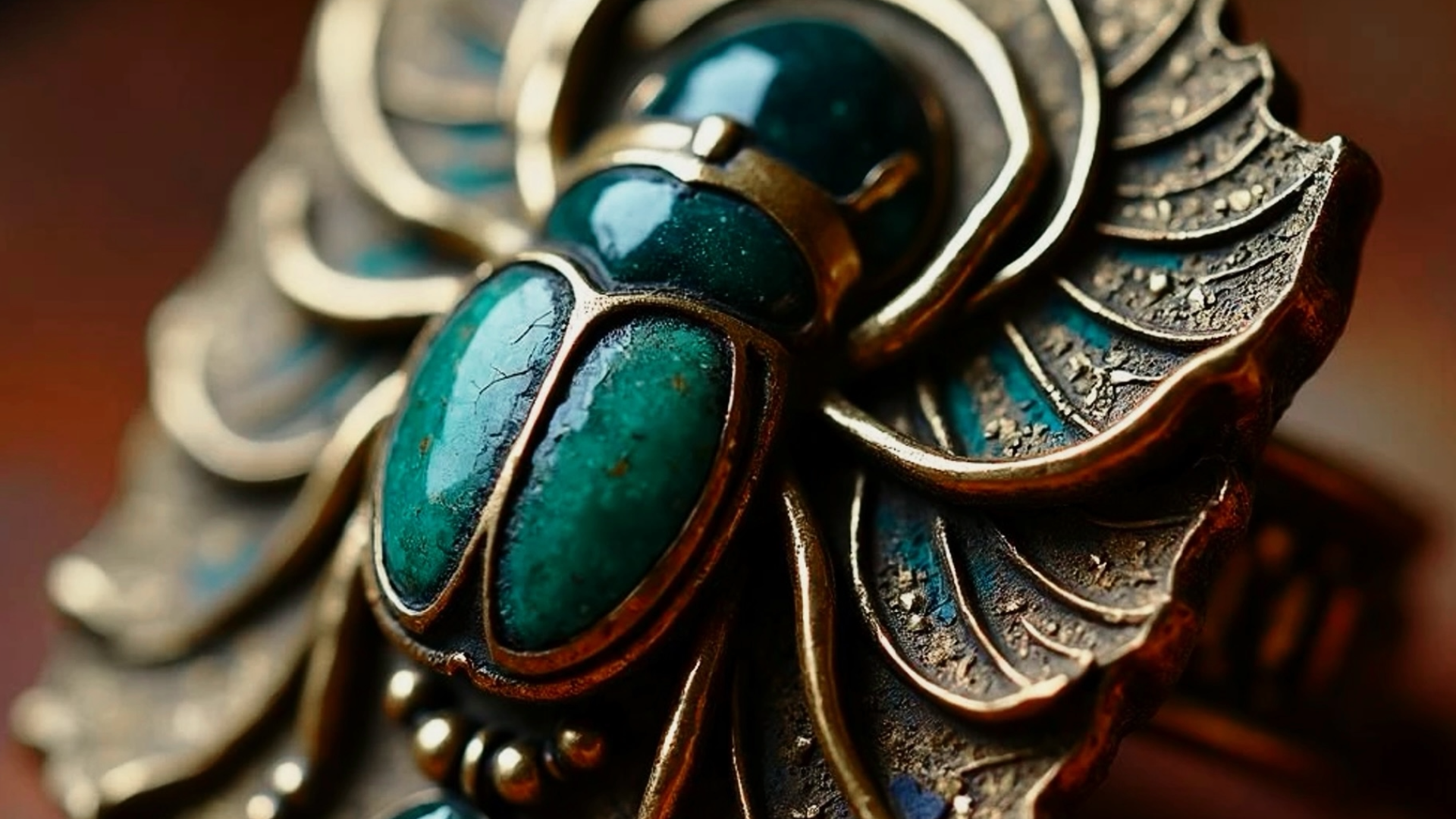
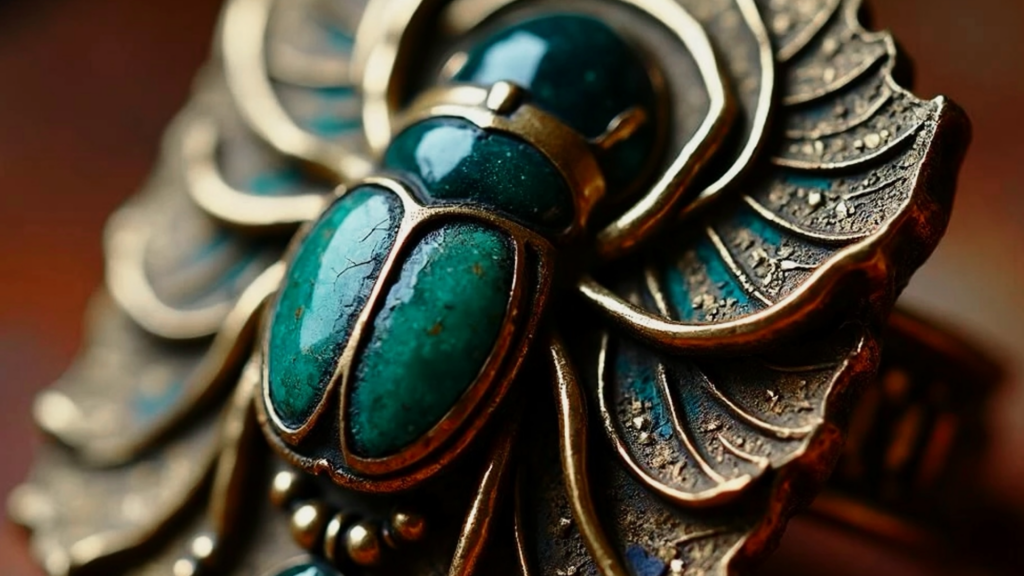
Some curatorial frameworks are organized around movements, historical periods, political concerns or formal aesthetics. Elizabeth operates from a different premise: that objects possess narrative lives beyond their immediate function. A staircase is never merely a staircase. A necklace is never merely an adornment. A city is never merely architecture. Each object exists as a fragment of a larger mythology waiting to be revealed.
At the center of this sensibility is an attraction to transformation. Architecture dissolves into memory. Nature reclaims structure. Ornament becomes narrative. The boundary between artifact and artwork becomes unstable. Objects are selected not because they are beautiful alone, but because they appear charged with history, mystery, or symbolic resonance.
The visual language emerges through recurring symbols: veiled cities, fractured mirrors, forgotten architecture, relics, stained glass, Victorian ornament, Art Deco geometry, and noir atmospheres. These elements function less as stylistic references than as artifacts from a larger imagined world.
Underlying this approach is a fascination with tension: structure and fragility, opulence and decay, revelation and concealment, history and invention. Cities become veiled. Statues become silent witnesses. Jewelry becomes architecture. Display structures become monuments. Objects are transformed from functional artifacts into carriers of narrative and memory.
Rather than presenting answers, this sensibility cultivates wonder. Viewers are invited into spaces that feel remembered rather than documented, discovered rather than designed. The goal is not to resolve mystery but to sustain it.
In this framework, curation becomes an act of world-building. Objects are gathered as evidence of an imagined civilization: part museum, part dream, part mythology. The exhibition becomes a place where beauty and mystery coexist, where the familiar is made strange, and where every artifact suggests a story larger than itself. What emerges is not a collection of objects, but the remnants of a world waiting to be rediscovered.